
Domestic institutional investors (DIIs) poured in Rs 94,829 crore of fresh money into Indian equities in August, the second-highest monthly inflow after record Rs 1.07 trillion influx in October 2024.

'Given the lag in transmission, further softening of lending rates may happen in the coming months.'

'The statistical confidence bands of the fan charts of the forecasts will provide a better sense of the potential variability of outcomes.'

Pre-initial public offering (IPO) allotments have fallen out of favour over the past two years amidst buoyant primary markets and increasing average float sizes. In 2023, 13 firms raised a record Rs 1,074 crore through pre-IPO placements.

Uncertainties over the impact of the United States' (US') tariffs on India, along with the ongoing transmission of past rate cuts, prompted the members of the Reserve Bank of India's Monetary Policy Committee (MPC) to maintain the status quo during the August meeting, the minutes showed. While some of the external members highlighted their concern over growth, the internal members cited the one-year headline inflation rate overshooting the 4 per cent target.

Domestic markets saw the addition of nearly 3 million new dematerialised (demat) accounts in July, marking the highest monthly increase since December 2024. This is also the third consecutive month that witnessed a rise in account openings, following a period of moderation from January to April.
After overtaking foreign portfolio investors (FPIs) in market ownership, domestic institutional investors (DIIs) have further solidified their dominance. DII ownership reached a new all-time high of 17.82 per cent as of June 2025, up from 17.62 per cent at the end of March 2025, according to an analysis by Prime Database.

Bad loans in the agriculture sector remain elevated, with several public-sector banks (PSBs) reporting higher slippages in the April-June quarter of FY26. For many banks, non-performing assets (NPAs) in farm lending were 5 per cent or more, with some nearing double digits.'

Market watchers link the pullback to underwhelming listing-day performance and the lack of big-name IPOs.

'India is a big market for StanC, and it is also fastest growing economy in the world.'
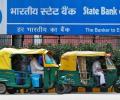
State Bank of India (SBI), the largest lender in the country, has launched a share sale to institutional investors to raise upto Rs 25,000 crore, the biggest qualified institutional placement (QIP) so far by an Indian firm, and has set a floor price of Rs 811.05, which is at a 2.5 per cent discount on Wednesday's closing price.

Experts say the robust filing suggests the second half of the year will see large-scale issuances, provided the markets remain supportive.

Promoters of India's top private listed companies have cut their stakes sharply since 2021, taking advantage of elevated valuations and reshaping ownership dynamics in the market. Holdings of promoters in the top 200 privately owned listed firms declined nearly 600 basis points (bps) to 37 per cent at the end of FY25, from 43 per cent in FY21.

'India has the potential to grow at more than 7%, with the monetary policy providing a supportive hand.'
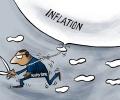
'Deposit and lending rates have started to fall considerably. It is likely to spur investment and consumption of durables.'

Large tariffs by the United States administration and elevated geopolitical risk have increased near-term global financial stability risks, and along with weather events pose downside risks to domestic growth, Reserve Bank of India (RBI) Governor Sanjay Malhotra said in the foreword to the Financial Stability Report released on Monday.
'Once bitten, twice shy, I didn't take up the challenge this time...' 'I realised I had failed to follow my karma because I feared failure.'

'The brand, the team, and the people have to make the transition from playing league matches to Test matches.'

Sebi's probe against Jane Street is part of its efforts to mitigate losses for individual derivative traders.
About 2.2 million new dematerialised (demat) accounts were opened in May, raising the total to 196.6 million as stock prices continued their upward trend.
 © 2026 Rediff.com - Advertise with us - Disclaimer - Privacy Policy - Sitemap - Feedback - About us - Terms of use - Grievances